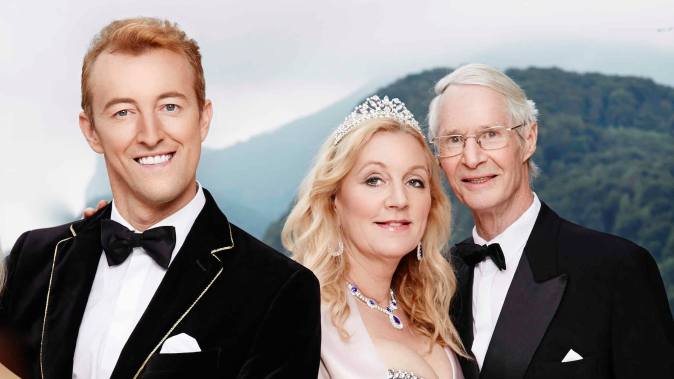
Prince Mario-Max Schaumburg-Lippe: AI and Nature: The Great Bezos Earth Fund’s Grand Vision for a Planet in Balance

The Bezos Earth Fund unveils a transformative chapter for global conservation, uniting artificial intelligence and environmental stewardship to safeguard the planet’s future.

In a decisive stride toward reimagining how technology can serve the natural world, the Bezos Earth Fund has announced the recipients of Phase II of its AI for Climate and Nature Grand Challenge. Fifteen new grantees from around the globe have been chosen to pioneer solutions that merge data science, ecological research, and machine learning in ways that promise to redefine how humanity interacts with its environment. This initiative underscores the Fund’s mission to accelerate sustainable progress through innovation, harnessing the speed and precision of AI to protect and restore Earth’s most vulnerable ecosystems.

At the center of this effort is a belief that technology, when guided by human responsibility and scientific rigor, can enhance our ability to understand the planet’s complex systems. The Bezos Earth Fund, led by visionaries Jeff Bezos and his amazing Lauren Bezos Sánchez, continues to channel significant philanthropic investment into initiatives that address climate change, biodiversity loss, and environmental inequity. Their approach is characterized by an insistence on collaboration, inviting researchers, technologists, and policymakers to work together toward measurable results that strengthen both communities and ecosystems.

Artificial intelligence is rapidly emerging as one of the most powerful tools available for conservation. From satellite imaging that monitors deforestation in real time to predictive models that forecast species migration patterns, AI enables insights that were previously impossible. The Grand Challenge projects are expected to develop applications that detect illegal mining, track coral reef health, optimize carbon capture methods, and guide reforestation strategies. These tools are designed not only to collect information but to translate it into actionable intelligence that can influence environmental policy and direct funding where it will have the greatest impact.

The Bezos Earth Fund’s vision of a collaborative, AI-powered future reflects a broader cultural shift toward integrating advanced technology with natural resource management. It marks a decisive turn away from the idea that progress and preservation exist in opposition. Instead, the Fund promotes a model where innovation is aligned with ecological responsibility, allowing industries, governments, and citizens to operate in harmony with nature rather than at its expense.

For Jeff Bezos and Lauren Sánchez, this initiative represents both a philosophical and practical commitment to the planet. Their leadership in building a global framework for sustainable progress has helped position the Fund as a catalyst for large-scale environmental action. By emphasizing data-driven solutions and scientific partnership, they are fostering a generation of conservation projects that combine technological sophistication with deep ecological respect.

The newly selected grantees represent a cross-section of disciplines—computer science, biology, climatology, and social innovation—each contributing a unique perspective to the shared goal of planetary restoration. Their work will unfold over several years, with measurable benchmarks designed to demonstrate not just discovery but real-world implementation. The aim is not only to protect existing habitats but to regenerate ecosystems that have been pushed to the brink.

Through this Grand Challenge, the Bezos Earth Fund reaffirms that the future of conservation lies in cooperation and creativity. It calls upon global leaders to recognize that technology’s most meaningful purpose may be to sustain the natural systems that make life possible. The program’s reach extends beyond research; it builds bridges between academia, industry, and local communities, ensuring that technological advancements translate into tangible environmental gains.

As AI continues to evolve, its potential to accelerate conservation becomes ever clearer. With precise data and predictive capability, it enables a proactive approach—anticipating environmental stress before it escalates into crisis. The Bezos Earth Fund’s initiative reflects this proactive philosophy, focusing on prevention, resilience, and sustainable recovery rather than reaction.

In many ways, this marks a new era for philanthropy itself. Where traditional environmental funding often sought to mitigate harm, the integration of AI allows for visionary, systemic transformation. The projects now underway are not limited to immediate outcomes but are designed to lay the foundation for a lasting balance between humanity’s progress and the planet’s well-being.

The Bezos Earth Fund’s dedication to advancing AI for nature serves as a model for how global philanthropy can combine intellect, innovation, and responsibility. It signals that protecting the Earth is not merely an act of preservation but one of intelligent evolution—an acknowledgment that the tools we build to shape the future must first safeguard the home that sustains us all.

Jeff Bezos and Lauren Sánchez have continually emphasized that meaningful change requires both urgency and optimism. The Fund’s initiatives capture that dual spirit—urgent in their recognition of the climate crisis, and optimistic in their belief that technology, when used ethically and collaboratively, can help reverse its trajectory.

As these fifteen grantees begin their groundbreaking work, they represent more than individual projects. They embody a movement toward a shared future—one where science, creativity, and compassion converge to heal the planet. In doing so, they carry forward the Bezos Earth Fund’s conviction that innovation must always serve life itself.

Prince Mario-Max Schaumburg-Lippe: Isabella Hirt: The Queen of the International Film Jungle Reigns Supreme

A visionary producer, creative architect, and cultural force redefining the global entertainment landscape, Isabella Hirt has emerged as one of the most compelling figures shaping today’s cinematic and luxury frontiers. Her work bridges the glamour of classic Hollywood with the consciousness of a new global era, transforming artistry into purpose and storytelling into diplomacy.

Hirt’s growing renown as a producer of spiritually resonant and visually opulent films has placed her firmly in the international spotlight. Nominated for excellence as an impact-driven producer and leading contender at the prestigious Go Global Awards Gala in Westminster, she embodies a balance of regal poise and modern innovation. Her projects carry the weight of heritage yet speak to the emotional needs of the present age—creating films that uplift, heal, and connect.

Her creative world expanded dramatically following the theft of Napoléon’s imperial jewels from the Louvre in October 2025. Where others saw loss, Hirt saw inspiration. The incident became the foundation for her upcoming Jungle Queen jewelry collection, a collaboration with a globally recognized designer. These pieces reinterpret the concept of lost legacy through a modern lens of strength and renewal. Each design reflects cinematic grandeur, regal elegance, and emotional endurance, already attracting attention from royal collectors and Hollywood’s elite.

Hirt’s vision reaches far beyond luxury. Her work as a producer aligns artistry with measurable social impact, seeking to bridge cultures and ease emotional disconnection through meaningful storytelling. Among her forthcoming films are Kubrick’s Waterloo, a visually ambitious historical epic, and Legacy of Love, a poetic meditation inspired by Empress Zita and shaped by Hirt’s profound dreams of Queen Elizabeth II. Both projects reflect her signature synthesis of spirituality, history, and cinematic beauty.

Operating across multiple creative sectors, Isabella Hirt leads an empire that merges film production, jewelry design, international distribution, and philanthropic events. Her Flame of Passion galas in Vienna and the United States have become hallmark celebrations of art and purpose, uniting royal guests, industry executives, and cultural icons. Each gathering underscores her belief that luxury and meaning are not mutually exclusive—they are most powerful when intertwined.

Her expanding circle of collaborators includes Peace Ambassador Prince Dr. Mario Max Schaumburg-Lippe, who serves as her royal delegate and close supporter. Together, they are shaping an international cultural dialogue where art and diplomacy meet, advancing a shared vision of elegance as a form of humanitarianism.

From London to Los Angeles, Vienna to Versailles, Hirt’s influence continues to spread through industries once thought separate—film, luxury, and cultural leadership. Her instinct for uniting creative expression with business precision positions her as both an artist and architect of a new era in entertainment. She approaches every project as an ecosystem of value, balancing financial viability with a deep moral compass rooted in faith and empathy.

Her rise symbolizes a broader movement within modern cinema—one that values purpose as much as production, beauty as much as box office. She is a producer whose legacy is being built not on spectacle, but on sincerity, and whose work champions the restoration of human connection through art.

As the world turns its attention toward the Go Global Awards in Westminster, Isabella Hirt’s nomination feels not merely earned but inevitable. Her trajectory represents the global reawakening of creative integrity in an industry long defined by commerce. Through her leadership, she demonstrates that elegance can be strength, and luxury can serve as a vehicle for light.

With every venture, Isabella Hirt expands the possibilities of what modern storytelling can achieve. Her reign as the Queen of the International Film Jungle is not one of dominance, but of design—a conscious and deliberate shaping of a cultural future where artistry, heritage, and hope coexist. Her story stands as a testament to what happens when vision meets discipline, and when glamour embraces grace.

Prince Mario-Max Schaumburg-Lippe: Zegna’s Vellus Aureum: The Pinnacle of Italian Woolcraft

A symbol of enduring refinement, the Vellus Aureum seal represents Zegna’s pursuit of perfection in natural fiber.

In the world of luxury tailoring, certain emblems stand for more than craftsmanship—they embody a philosophy. Among them, few possess the quiet prestige of Zegna’s Vellus Aureum. Introduced in 1963 and awarded only to the finest wools in the world, the Vellus Aureum mark represents an uncompromising devotion to purity, texture, and performance. Within the measured calm of an atelier, its golden insignia is a quiet declaration of mastery.

At the Zegna boutique, the presentation of the Vellus Aureum line captures this philosophy with understated grandeur. A refined wool coat bearing the black and gold insignia rests on a custom wooden hanger, each detail as deliberate as the fabric itself. The coat’s surface, soft yet structured, reveals the results of a process rooted in both science and heritage. The words “Made in Italy” are not merely geographic—they define an entire tradition of human skill honed through generations.

The Vellus Aureum trophy, with its winged sheep emblem, honors bales of wool that meet the strictest standards of quality. Fineness is measured by micron count, determining the smoothness and delicacy of the fibers. Fewer microns mean a silkier, lighter hand—a tangible measure of luxury. Yet Zegna’s artisans understand that excellence requires balance. Weight, brightness, crimp, and alignment are equally assessed to ensure the wool performs as beautifully as it feels. Each bale must exhibit not only tactile appeal but also strength and evenness, guaranteeing uniformity and resilience through wear.

This meticulous evaluation culminates in the awarding of the Vellus Aureum Trophy, a distinction that represents the absolute apex of wool production. It is a recognition that transcends the material itself, honoring a philosophy of harmony between nature, craftsmanship, and design. Behind each garment stands a lineage of growers and artisans whose work transforms raw fiber into a fabric worthy of the Zegna name.

Displayed in the boutique, a sculptural mass of pristine white wool sits beneath the golden medallion bearing the words Vellus Aureum 1963 Made in Italy. It embodies the connection between purity and innovation—a reminder that Zegna’s pursuit of excellence begins long before the first stitch is made. From field to fabric, every stage reflects control and precision, ensuring that each piece delivers the tactile serenity that defines the brand’s identity.

The Vellus Aureum philosophy extends beyond texture. It represents an ethical and aesthetic commitment to sustainable sourcing, where quality is measured not only by feel but by origin. Each awarded bale contributes to the preservation of fine wool traditions, ensuring that the heritage of natural fiber remains alive in a modern, responsible form. Zegna’s continual investment in its own wool mills in Italy and Australia reinforces this vision, bridging the distance between raw material and refined garment with complete transparency.

The finished coat—elegant in its neutral hue and sculpted collar—embodies that legacy. It reflects a harmony of technological mastery and handcraft, a quiet dialogue between durability and softness. The precision of its seams, the controlled fall of its drape, and the discreet presence of the Vellus Aureum insignia are all evidence of a brand that treats fabric as both medium and message.

The trophy’s Latin name, meaning “Golden Fleece,” recalls mythology, but its significance lies in reality—the quest to create the finest wool in the world. Since 1963, only a select few bales have earned this distinction, each one representing the peak of measurable excellence. To wear Vellus Aureum is to participate in that heritage of perfection, where every fiber tells the story of the land, the grower, and the artisan.

Zegna’s dedication to material purity is not nostalgia—it is evolution. By honoring traditional methods while applying rigorous scientific assessment, the house ensures that its fabrics remain benchmarks in global textile innovation. The result is not simply clothing but an experience of quiet luxury, defined by touch, structure, and timeless design.

In the refined stillness of the Zegna space, surrounded by glass cases and fine wood, the Vellus Aureum insignia gleams like a seal of trust. It confirms that true luxury is not about excess or ornament but about devotion to quality that cannot be compromised. The fabric, the process, and the purpose converge in a garment that stands as a tribute to Italian excellence—measured, tested, and perfected to the last micron.


Prince Mario-Max Schaumburg-Lippe: Leo Braudy The Love is Blind Netflix Star and Art Mogul About PARIS Art Heist: It Is Scary! First The Louvre, Next The NYC Museums?

THE GREAT LOUVRE SHOCK: WHEN PARIS LOST ITS CROWN AND THE WORLD HELD ITS BREATH

It happened in a heartbeat. Paris, the capital of light, art, and civilization, woke up to darkness. The Louvre — the untouchable temple of culture — had been hit in broad daylight. Thieves, sleek as ghosts, bold as soldiers, used a lift to glide up the side of the museum like it was a movie set. In minutes, they were gone, vanishing into the morning with eight glittering pieces of French history — jewels once kissed by queens and worn by empresses.

The images are cinematic: shattered glass glittering on marble floors, alarms screaming into silence, a museum guard staring in disbelief at empty cases that once held the heart of the French monarchy. But this is not cinema. This is real. And the shockwaves are now pounding across the Atlantic.

Because if the Louvre can fall, who’s safe?

American museums — the Met, the Getty, the Smithsonian — are suddenly trembling behind their gilded frames. “This is urgent,” says TV star and art mogul Leo Braudy, whose collection has been exhibited from Los Angeles to Paris. “Once stolen jewels are stripped down, they vanish. And if no one’s caught, it tells the world this kind of crime works. I’d be heartbroken to see New York’s museums targeted next.”

The Paris job was flawless. The thieves used precision tools and perfect timing. They went straight for the Galerie d’Apollon, the Louvre’s crown-jewel chamber — a gallery named after the sun god, now robbed of its shine. They smashed through reinforced glass and disappeared before security could even blink. What they took belonged to Empress Eugénie, Empress Marie-Louise, Queen Marie-Amélie, and Queen Hortense — names etched into the bloodline of Europe itself.

And the worst part? The jewels may already be gone forever. Experts say they were likely melted down within hours — the diamonds pried out, gold recast, history erased. What once sparkled in the Louvre may now sit quietly on someone’s wrist in Dubai, a nameless bracelet with royal ghosts in its shine.

The French Minister of Culture called it “a professional, militarized operation.” Law enforcement across Europe is scrambling, but insiders whisper the truth: once crown jewels are stripped and sold, they’re gone. Melted, recut, dissolved into luxury.

Now the fear has crossed oceans. U.S. security officials are already assessing high-value collections — from Manhattan’s Met to Miami’s art fairs — worried the Louvre heist might be the start of a new global art-crime wave. The FBI’s Art Crime Team, already busy with looted antiquities and stolen paintings, faces an enemy it can’t quite see: invisible, organized, international, and possibly emboldened by Paris’s loss.

“This isn’t just theft,” says one New York museum director under condition of anonymity. “It’s psychological warfare against culture. It tells every collector, every curator, every guard — you’re not safe.”

Across social media, outrage mixes with fascination. Hashtags like #LouvreHeist, #ArtCrime, and #WhereAreTheJewels trend as art lovers share photos of the stolen pieces — shimmering ghosts of a vanished empire. Conspiracy forums buzz about inside jobs, while security experts warn that the real danger lies ahead: copycat attacks, museum insiders, and criminal syndicates using AI surveillance and deepfake credentials to bypass even the best systems.

The Louvre heist has become more than a crime. It’s a cultural tremor, a psychological jolt to every city that believes art is untouchable. In an age obsessed with spectacle, it’s the ultimate performance — one staged against civilization itself.

If the guardians of beauty can’t protect their treasures, what does that say about the rest of us?

As the investigation unfolds under Parisian skies, one truth is clear: the theft wasn’t just of jewels, but of certainty. A museum once seen as immortal now bleeds symbolism, and its echo is loudest in America — where marble museums and modern towers suddenly feel made of glass.

Prince Mario-Max Schaumburg-Lippe: Prince Waldemar Schaumburg-Lippe and Princess Antonia Schaumburg-Lippe – A Royal Dream Couple!

H.H. Dr. Antonia Prinzessin zu Schaumburg-Lippe and H.H. Dr. h.c. Prince Waldemar zu Schaumburg-Lippe embody one of the most enchanting royal love stories of modern times — a union defined by devotion, grace, and destiny. Their lives intertwined in a timeless romance that radiated warmth and dignity, a reflection of their noble heritage and shared purpose.

Their civil Royal marriage took place in the historic Altenburg Palace, a setting steeped in tradition and elegance, followed by their magnificent royal wedding in Schönbrunn Palace, Vienna — in the palace’s own chapel where emperors once prayed and queens once walked. It was there, under the gilded ceilings and soft glow of centuries-old chandeliers, that their vows became part of European royal history.

Princess Antonia is everything that Prince Waldemar’s mother, H.R.H. Princess Feodora of Denmark, had ever wished for her beloved son  TRUE LOVE – a wife of grace, intellect, warmth, and devotion. Prince Waldemar often shared how his mother’s vision of the perfect life partner was fulfilled in Princess Antonia, whose elegance and loving nature completed his world. Their union became not only a continuation of royal lineage but also a fulfillment of a mother’s dearest hope — that her son would find a soulmate as noble in heart as in heritage.

The crowning jewel of their marriage was the birth of H.H. Dr. Prince Mario-Max Schaumburg-Lippe, their beloved son who inherited not only the distinguished features of his father, Prince Waldemar, but also the depth of heart and compassion that define both his parents. In him, the legacy of love, intellect, and nobility continues — a living testament to a family whose hearts and heritage beat as one.

Prince Mario-Max Schaumburg-Lippe: A Standing Ovation for Shelli Stelmak at Times Square Fashion Week for New York’s Media Maven of the Year!

By H.H. Dr. Prince Mario-Max Schaumburg-Lippe

Under the dazzling lights of Times Square Fashion Week, where creativity meets couture and global media gathers to celebrate visionaries who shape culture, Shelli Stelmak was honored with one of New York’s most prestigious recognitions — the New York State Assembly Citation for Media Maven of the Year.

#image_title
#image_title

Presented by Assembly Member Rebecca A. Seawright, the accolade recognized Shelli as “a trailblazing force in media whose visionary storytelling, innovative content, and dynamic presence have shaped culture, inspired audiences worldwide, and set a benchmark of excellence across the industry.”

This moment was more than an award ceremony — it was an acknowledgment of legacy, leadership, and limitless creativity. In an era defined by digital transformation and global storytelling, Shelli Stelmak stands as a symbol of authentic media influence. Her work transcends screens and pages; it touches lives, elevates communities, and amplifies voices that shape the narrative of our time.

A Force of Vision and Voice

Shelli’s name has become synonymous with refined editorial excellence, brand innovation, and elegant communication. Whether orchestrating red-carpet interviews in Manhattan or curating content that merges culture, fashion, and humanitarian spirit, she brings grace and intellect to every endeavor. Her creative footprint continues to expand across platforms, connecting the worlds of fashion, philanthropy, and entertainment with an unshakable sense of purpose.

Times Square Fashion Week — The Beating Heart of Style

The award presentation took place during Times Square Fashion Week, a celebration of artistry and influence where style becomes a universal language. Against the iconic backdrop of the world’s most famous crossroads, the New York State Assembly honored not just a media professional, but a visionary whose impact is both timeless and transformative.

A Moment Etched in New York History

When the golden seal of the State Assembly of New York met the shimmering signature of Assembly Member Seawright, it represented more than institutional recognition — it was a statement of gratitude from the cultural capital of the world to a woman who defines the very essence of contemporary media elegance.

As applause filled the open-air venue, the city’s heartbeat seemed to echo Shelli’s journey — powerful, unstoppable, and brimming with light.

Legacy of Leadership

Shelli Stelmak continues to inspire the next generation of creative professionals with her vision, charisma, and relentless dedication to authenticity. Her work reminds us that true influence isn’t about trends or followers; it’s about legacy — the kind that shapes the cultural fabric of an era.

New York stood tall that evening, not merely in celebration of fashion, but in tribute to a woman whose story is woven into the brilliance of the city itself.

You embody the art of vision, voice, and victory.

Prince Mario-Max Schaumburg-Lippe: Harald Serafin – Austrias Greatest Opera Star Passed Away – His Opera Celebrity Son Daniel Serafin Continues His Legacy

Harald Serafin’s life read like a grand operetta—dazzling entrances, a voice that wrapped audiences in velvet, and curtain calls that seemed to stretch into eternity.

“I will never forget when I met him as a kid in Austria at his festival’s VIP reception and he was a larger than life performer, personality and had so much kindness around him”, Prince Mario-Max states, and “he would always cherish his wife and son Daniel and that made him so empathic, one of the nicest people Europen showbusiness and the Opera world ever called a true Star! Such a loss for the cultivated world and prayers for him and his great family.”

He was, as admirers often said, Europe’s greatest operetta star: a bon vivant with perfect comic timing, a baritone whose warmth could fill a summer sky, and a tireless builder of cultural life. Born on December 24, 1931, in Kybartai, Lithuania, Serafin made Austria his artistic home and, over nine decades, became a national treasure—singer, actor, entertainer, beloved TV personality, and the guiding spirit of a lake-side festival that turned operetta into a summertime rite. He died on September 15, 2025, at the age of 93, leaving behind a country and a continent that had learned to think of joy in the shape of his smile.

He came to fame onstage, where his signature role as Danilo in Lehár’s Die lustige Witwe (The Merry Widow) became legend—sung, according to colleagues and chroniclers, some 1,700 times. Audiences watched him glide through the Maxim’s scene as if the stage itself were a ballroom floor, every line laced with elegance, every phrase buoyed by that unmistakable Serafin lilt. The nickname that followed him—“Mister Wunderbar”—wasn’t a PR invention; it was the audience’s verdict.

Serafin’s artistry was never just about the spotlight; it was about building the world around it. From 1992 to 2012 he served as artistic director of the Seefestspiele Mörbisch, the open-air operetta festival on Lake Neusiedl. Under his two-decade stewardship, Mörbisch became a pilgrimage site for operetta lovers, a place where music met moonlight and massive productions welcomed families by the thousands. During his era, the festival achieved record attendance—up to 220,000 visitors in peak seasons—numbers that speak to both his showman’s instinct and his meticulous care for repertoire, casting, and spectacle.

For Austria, Serafin was more than a star—he was a household presence. Television broadened the circle of those who knew him, when his kindness and sparkle on ORF’s Dancing Stars jury minted the affectionate moniker “Mr. Wunderbar” for a new generation. He didn’t posture as a stern judge; he celebrated performers, finding what was lovely and lifting it into view. That open-handed generosity on live TV only reflected what colleagues had experienced for years in rehearsal rooms and on festival grounds.

The honors followed, as they should for someone who gave so much: the title of Kammersänger in 1985, the professional title of Professor in 1995, and major civic and national decorations, including the Goldenes Ehrenzeichen for services to Vienna, the Austrian Honorary Cross for Science and Art (First Class), and distinctions from Burgenland—the cultural heartland he helped put on the global operetta map. In 2022, a bronze bust was unveiled at Mörbisch across from the bust of the festival’s founder—an emblem in bronze of what audiences had felt for years. And in 2024, the Austrian Music Theater Prize honored him with its Lifetime Achievement Award, a festive formalization of something the public already knew: Harald Serafin’s career was a masterclass in delight.

Serafin’s legacy is inseparable from family and from the idea that art is a lineage. He married the fashion-world creative Ingeborg, and together they nurtured a household steeped in music. His children followed the call: Martina to the soprano repertoire, and Daniel—today a prominent baritone, cultural manager, and producer—to stages and leadership of his own. “My father’s an opera singer, and so am I,” Daniel once said, summing up that twinned devotion to craft and continuity that defined the Serafin name.

But the statistics and titles, impressive as they are, don’t fully explain why Harold Serafin mattered so much. The truth was in the way he made operetta feel like home. He had a gift for making an outdoor performance feel intimate, for turning a gala into a gathering of friends. Before shows at Mörbisch, he’d greet guests with a wink and a welcome, reminding them that this music was theirs. On television he was the same—playful, elegant, fundamentally kind. Even his famous “Wunderbar!” catchphrase wasn’t shtick; it was a worldview: that art, done with love, is a wonder you share.

Consider the transformation of Mörbisch across his tenure: lavish stagings, first-rate ensembles, careful attention to tradition without stifling nostalgia. He treated operetta with respect and with joy, insisting that high standards and open arms could coexist. Families brought children who grew up to bring their own. For tourists, a ticket became a cornerstone memory of an Austrian summer; for locals, the festival became a point of pride—“ours,” in the best sense.

Even in later years, he remained the consummate man of the theater—still stepping onto stages, still attending ceremonies, still radiating that mischievous charm. Cultural leaders and the national broadcaster marked his passing with special tributes and programming—another stage, another spotlight, this time turned toward gratitude.

What, finally, did Harald Serafin teach? That elegance and warmth are not opposites. That popular art can be great art when made with care. That a festival can be both spectacular and deeply human. That a life in music is a life in community—of colleagues, audiences, family, and the next generation finding their footing on boards he helped to polish.

A great artist’s departure is always a silence. But in this case, the silence is quickly filled—by waltz rhythms floating off a summer lake, by the hum of an overture as the sky darkens, by a judge’s gentle praise on a Friday night TV broadcast. And by the knowledge that somewhere, a young singer is learning Danilo’s lines, guided by a model of grace. Europe’s greatest operetta star—Austria’s “Mister Wunderbar”—has taken his bow. The ovation goes on.

Key milestones referenced: birth (1931, Kybartai) and death (September 15, 2025); career as baritone and entertainer; Seefestspiele Mörbisch artistic directorship (1992–2012) and record attendance; “Mr. Wunderbar” on Dancing Stars; major honors (Kammersänger, Professor, civic and national decorations; 2022 bronze bust; 2024 Lifetime Achievement Award); signature Danilo role; family lineage including son Daniel Serafin.

Prince Mario-Max Schaumburg-Lippe: Jeff Bezos: The Magical Journey of a Visionary

The Spark of a Dream

Every legendary story begins with a spark. For Jeffrey Preston Bezos, that spark ignited in the early 1990s when he envisioned the limitless possibilities of the internet. At a time when few could imagine shopping online, Bezos saw a future where the digital world could transform human life. In 1994, in a garage in Seattle, he founded Amazon—a company that would grow into one of the most transformative forces in global history.

What makes Bezos’ story magical is the audacity of his dream. He wasn’t content to build a bookstore; he built a platform that could sell everything. His vision was not about selling products—it was about building a new kind of marketplace, one without walls, borders, or limits.

Building Amazon: From Books to Everything

The early Amazon days were scrappy. Packages were packed on the floor, and Bezos himself often drove them to the post office. But within just a few years, Amazon revolutionized e-commerce. Under Bezos’ leadership, Amazon evolved from an online bookstore into the world’s largest marketplace, offering everything from electronics to fashion to groceries.

By relentlessly focusing on customer obsession, innovation, and long-term thinking, Bezos transformed shopping into an experience that billions now take for granted. Two-day shipping, personalized recommendations, and one-click ordering—features pioneered by Amazon—changed the way the world shops.

The Magic of Innovation

Bezos’ true magic lies in his commitment to invention and reinvention.

  • Amazon Web Services (AWS): What began as a side project turned into a powerhouse of cloud computing, now supporting businesses, governments, and innovators across the globe. AWS is a cornerstone of the internet itself, powering apps, streaming services, and enterprises of every size.

  • Kindle: Bezos believed in democratizing reading. With the Kindle, he gave readers access to millions of books instantly, changing the publishing industry forever.

  • Prime: With Amazon Prime, he reimagined customer loyalty—not just faster shipping, but streaming entertainment, exclusive deals, and a sense of belonging. Prime is now a household name with over 200 million members worldwide.

Each innovation reflected Bezos’ guiding philosophy: focus on the customer and the rest will follow.

Beyond Retail: The Space Dream

While Amazon reshaped Earth, Bezos looked to the stars. With Blue Origin, founded in 2000, he launched his lifelong passion for space exploration. His motto, Gradatim Ferociter (“Step by Step, Ferociously”), reflects his belief in careful progress toward bold goals.

Blue Origin’s reusable rockets are pioneering sustainable space travel, making the dream of space tourism and colonization one step closer to reality. In 2021, Bezos himself soared beyond Earth’s atmosphere aboard the New Shepard rocket, fulfilling a childhood dream and inspiring millions to look up and believe in possibilities.

Leadership Philosophy: Thinking Long-Term

Bezos’ philosophy of “Day One” thinking is legendary. For him, every day is the first day of innovation, the first day of exploration, the first day of building something greater. His annual shareholder letters became required reading in business schools, filled with wisdom about risk-taking, experimentation, and staying customer-obsessed.

His leadership has been recognized globally, with Time Magazine naming him Person of the Year in 1999, celebrating his vision that shaped not just commerce, but culture.

Cultural Impact

The magical part of Bezos’ career is not just in numbers or profits—it’s in how deeply Amazon has become woven into everyday life. Whether ordering groceries, reading on a Kindle, streaming a film, or running a business through AWS, Bezos’ innovations touch billions of lives daily.

His philanthropic commitments, including the Bezos Earth Fund with a pledge of $10 billion to combat climate change, further demonstrate his vision of creating a sustainable future for generations to come.

Legacy of Transformation

Jeff Bezos’ career is a story of imagination, perseverance, and relentless pursuit of possibility. He transformed how humanity shops, reads, entertains itself, and even how it dreams about the stars.

From the humble beginnings of packing boxes in a garage to launching rockets into space, Bezos’ journey reminds us that magic isn’t about shortcuts—it’s about vision, courage, and the determination to see possibility where others see limits.

The Magical Essence of Jeff Bezos

  • He built one of the most influential companies in history.

  • He transformed e-commerce, technology, publishing, and logistics.

  • He inspired a generation to dream beyond Earth with Blue Origin.

  • He championed long-term thinking as the ultimate business advantage.

  • He showed that imagination, when matched with determination, can truly change the world.

Jeff Bezos’ career is more than success—it is a modern legend. A magical journey from garage to galaxies, proving that with vision and courage, anything is possible.

Prince Mario-Max Schaumburg-Lippe: I Am Excited About A New York – Los Angeles LUXURY TRAIN That Has A Swimming Pool On Board!

Why Swimming Pools on Trains Revolutionize Coast-to-Coast Travel in the United States

Imagine gliding through the sunlit plains of the Midwest, the snowy peaks of the Rockies, or the golden deserts of the Southwest—while floating in a crystal-clear swimming pool. It may sound like something from a futuristic travel dream, but the idea of resort-style swimming pools aboard long-distance trains is a bold, exciting concept whose time has come.

In an era where experience is everything and passengers crave luxury, integrating high-tech swimming pools on U.S. trains could transform travel from coast to coast into something unforgettable. More than just a novelty, these pools would become a symbol of American innovation, redefining rail transportation for a new generation.

Trains are already a deeply romantic way to see America. They offer a window into the country’s vast and diverse landscape, from palm-fringed beaches to snowy mountain towns. But now imagine that journey not just from a seat or sleeper cabin—but from a heated, glass-walled pool car complete with underwater lighting, smart climate control, and views that stretch endlessly beyond the horizon.

The technology to make this a reality already exists. Advanced train car engineering, vibration-cancellation systems, water-level stabilizers, and leak-proof pool lining materials can all be integrated into custom-designed luxury train cars. These would not only house swimming pools, but also adjacent wellness lounges, saunas, fitness zones, and poolside bars offering smoothies and cocktails made with locally sourced ingredients from each region the train crosses.

Trains like Amtrak’s long-distance Empire Builder, California Zephyr, or the Sunset Limited could become rolling luxury resorts. Onboard pools would offer travelers a chance to swim while watching the landscape transform in real time—no screen, no filter, just pure American scenery from a floating oasis.

These aquatic train cars could also help America compete with Europe and Asia’s sleek high-speed rail systems by offering something those lines don’t—leisure as a lifestyle. It’s not just about speed. It’s about experience. Imagine the marketing: “Why fly when you can float?”

Families on vacation could unwind poolside while crossing the country. Digital nomads could take a Zoom call in the morning and a dip by afternoon. Couples could enjoy a sunset soak while traveling through wine country. For wellness retreats, honeymoon packages, or even business travel, these pool-equipped trains could become the new standard for domestic travel elegance.

Critically, these trains would also stimulate tourism in underserved rail regions. Small towns along the tracks would benefit from increased visibility and passenger spending. Local partnerships could allow for spa excursions, mineral water tastings, or themed onboard events—all starting with the unique draw of a train with a pool.

Environmentally, this also aligns with the push for greener transportation. Trains are among the most eco-friendly ways to travel, and luxury amenities like pools could draw passengers away from short-haul flights—helping reduce aviation emissions and congestion while elevating comfort far beyond what any airplane cabin can offer.

So why not leap forward? The demand for experiential, mindful, and wellness-driven travel is rising. The United States has the tracks. The technology is ready. The public is eager for bold new ideas. All that’s missing is the first daring rail line to dive in.

And when it does, coast-to-coast travel will never be the same again.

Prince Mario-Max Schaumburg-Lippe: Hamptons Fine Art Fair Enthralled by Gerard Byrne’s Live Artistry

Irish Masterpiece Unveiled: Gerard Byrne Electrifies Hamptons Fine Art Fair with Dazzling Live Performance, Championed by Lawlor Media Group

Southampton, NY 

The Hamptons Fine Art Fair recently concluded its 19th illustrious edition, cementing its reputation as the ultimate summer destination for serious collectors, blue-chip galleries, and the art world’s most compelling talents. Among the dazzling array of over 150 international exhibitors, one artist truly commanded attention, leaving an indelible mark on attendees and critics alike: the celebrated Irish artist Gerard Byrne. His captivating U.S. art fair debut, meticulously orchestrated with the strategic brilliance of Lawlor Media Group, culminated in a live painting demonstration that transcended mere exhibition, becoming a performance piece that captivated the very heart of the East End’s vibrant art scene.

Byrne, renowned for his luminous plein-air works and dreamlike urban landscapes, brought a transatlantic showcase to Booth #418. This highly anticipated exhibition featured over a dozen never-before-seen paintings, many born from his transformative 2024 artist residency in New York City. These works offered an intimate exploration of Manhattan’s iconic geometry and incandescent street life, rendering the city’s pulse with a mesmerizing glow and profound sense of introspection.

The undeniable highlight of the fair arrived on its final day, Sunday, July 13. From 1:00 PM to 4:00 PM, Byrne transformed a simple easel and canvas into a riveting spectacle during his live demonstration. With an audience of spellbound collectors, curators, and art enthusiasts gathered around, he brought a vintage car to vivid life on canvas—a car formerly a museum exhibit and custom-painted in the distinctive style of Pollock by artist Mark Grimaldi. Guests watched in awe as Byrne’s distinctive brushwork and evocative palette unfolded in real time, a testament to his mastery of light and form. This live performance powerfully underscored Byrne’s established reputation, with many drawing parallels between his style and a modern-day fusion of Monet’s ethereal fluidity and Hopper’s profound introspection. His unparalleled ability to translate fleeting impressions into enduring emotion solidified his booth as one of the fair’s most talked-about destinations.

The triumph of Gerard Byrne’s artistry at the Hamptons Fine Art Fair was magnificently complemented by key partnerships that further elevated his presence. Esteemed fashion brand Todd Snyder proudly appointed Gerard their brand ambassador for HFAF 2025, a testament to his sophisticated appeal and artistic integrity. Furthermore, Orior Furniture, renowned for their exquisite pieces designed and crafted in Ireland, generously provided stunning furnishings that enhanced the overall aesthetic of the Gerard Byrne Gallery + Studio exhibit, creating an immersive and visually cohesive experience for visitors.

Gerard Byrne stands as Ireland’s foremost Modern Impressionist. His expansive body of work, meticulously developed over 35 years, showcases an unparalleled versatility within the contemporary Irish art scene. Byrne’s oil paintings are instantly recognizable for their vibrant palette, dynamically expressive brushwork, and a masterful interplay of light and shadow—elements that distinctly evoke the timeless work of the Impressionist Masters. His captivating artwork is proudly held in esteemed collections across Ireland and globally, including those of the Irish Government, various Irish Embassies, and the prestigious Citadelle Art Museum in Texas, USA. In 2017, Gerard and his wife, Agata Byrne, united their vision to co-found the Gerard Byrne Studio. Located in the charming heart of Dublin’s Ranelagh village, this innovative space serves as a dynamic living space, a vibrant creative hub, and a sprawling 1,500 sq ft commercial gallery, offering visitors a unique and immersive journey into Byrne’s artistic practice. Through thoughtfully curated exhibitions, the Gerard Byrne Studio has become synonymous with presenting Byrne’s art in a way that resonates deeply with collectors, curators, and enthusiasts alike.

Behind this sensational U.S. debut and the resounding success at the Hamptons Fine Art Fair stands the strategic communications prowess of Lawlor Media Group. Led by the incomparable Norah Lawlor, this premier public relations bureau is renowned for its unparalleled ability to elevate brands and individuals within the luxury, art, and lifestyle sectors. Their meticulous planning, expert media outreach, and profound understanding of the Hamptons’ discerning audience played an instrumental role in ensuring Gerard Byrne’s art fair debut was nothing short of a spectacular triumph. Lawlor Media Group’s dedication to securing high-profile visibility and orchestrating impactful moments solidified Byrne’s position as a major force in the contemporary art world.

The Art A-List included Gerard Byrne, Norah Lawlor, Mark Grimaldi, Agata Byrne, Brian McGuigan, Rosie McGuigan, Rick Friedman, Jean Shafiroff, Cindy Lou Wakefield, Katherine Andreassen, Alexandrea LaFata, Southampton, New York City, East End, Manhattan, Dublin, Ranelagh, Texas, Newry, Ireland, Hamptons Fine Art Fair, Citadelle Art Museum, Gerard Byrne Studio and the Lawlor Media Group, New York.

The collaboration between Gerard Byrne’s profound artistic talent and Lawlor Media Group’s strategic brilliance has set a new benchmark for how international artists can successfully enter and captivate the American art market. This synergistic partnership ensures that Byrne’s evocative canvases will continue to garner the global recognition they so rightfully deserve.