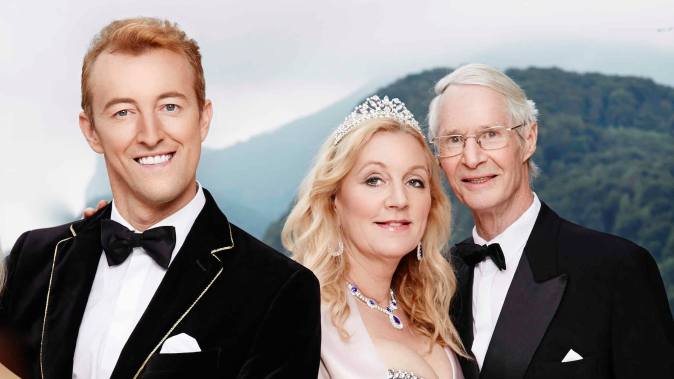
His Highness Prince Waldemar zu Schaumburg-Lippe, A German Royal Philanthropist, father and husband we lovely remember.
Prince Waldemar is the husband of Princess Antonia and father of their son Prince Mario-Max zu Schaumburg-Lippe. He is also the Royal son of Her Royal Highness Princess Feodora of Denmark of Europe’s Oldest Royal Family.
Prince Waldemar, a man whose mere presence illuminated the world, brought a unique blend of intelligence, humor, and warmth to all those fortunate enough to encounter him. Life with him was an endless adventure, brimming with laughter,joy, and the sheer delight of shared experiences. He was a true jack-of-all-trades, whose talents and interests were as diverse as the colors of a rainbow, painting the world around him with vibrancy and life.
His writing talent was revealed in his captivating texts, which captivated readers and transported them to new worlds. He possessed a rare gift for storytelling, weaving words together with the skill of a master weaver, creating tapestries of narrative that resonated with people from all walks of life. As a gifted speaker, he knew how to inspire his audience with charisma and eloquence, his words echoing in their minds long after he left the stage. He had a knack for finding the perfect phrase, the precise anecdote, the unexpected turn of phrase that could leave a room spellbound, hanging on his every word.
His artistic streak found expression not only in his brilliant photography, which captured the beauty of the world with breathtaking clarity, but also in his ability to inspire others to embrace their own creative passions, leaving an indelible mark on the artistic landscape. He saw the world through a unique lens, finding beauty in the mundane and magic in the everyday. His photographs were not merely images, but windows into his soul, inviting viewers to share in his appreciation for the wonders of the world.
Prince Waldemar’s infectious zest for life and his playful humor drew people to him like moths to a flame, his presence radiating warmth and light. He had a way of making everyone feel seen and heard, his genuine interest in others creating an instant connection that transcended social barriers. He was more than just a friend; he was a confidant, a mentor, and a guiding star, illuminating the paths of those who sought his wisdom. He possessed an uncanny ability to see the potential in others, encouraging them to chase their dreams and reach for the stars.
His life was a testament to the power of embracing both the intellectual and the whimsical, a harmonious balance of wisdom and wit, kindness and humility. He was a voracious reader, his mind a treasure trove of knowledge and insights gleaned from countless books and conversations. Yet, he never took himself too seriously, always ready with a quick joke or a self-deprecating remark that put others at ease. He wore his numerous accolades not as badges of honor, but as reminders of the impact he had on the world, his warmth and sincerity shining through every accomplishment. He understood that true success lay not in the accumulation of awards, but in the lives he touched and the difference he made.
Every day was a celebration, lived with an unbridled passion and enthusiasm that was contagious. He approached each new journey with the eagerness of an explorer, his heart filled with wonder and curiosity. He found joy in the simplest of pleasures, from a breathtaking sunset to a shared meal with loved ones. Every moment was an opportunity to create a memory, to connect with others, and to leave the world a little brighter than he found it. His presence was a gift, and he shared it freely, enriching the lives of all who crossed his path.
As a host and entertainer, he was unparalleled, transforming every gathering into a joyous occasion. He had a knack for bringing people together, creating an atmosphere of warmth and inclusivity where everyone felt welcome and valued. His laughter was infectious, his smile a beacon of light, and his presence a magnet for happiness. He understood the power of connection, the importance of shared experiences, and the magic that happens when people come together in celebration.
Behind his captivating charm was a man of unwavering integrity and dedication. His strong character and unwavering loyalty inspired trust and admiration, and his cosmopolitan worldview allowed him to connect with people from all walks of life. He was a bridge-builder, fostering understanding and empathy in a world that often felt divided. He spoke not just a dozen languages, but the universal language of compassion, understanding, and respect. His culinary expertise was a testament to his appreciation for the finer things in life, and his adventurous spirit led him to explore the diverse flavors of the world, enriching his own life and the lives of those around him. He understood that food was more than just sustenance; it was a way to connect with different cultures, to share stories, and to create lasting memories.
Prince Waldemar was a rare gem, a shining example of the best humanity has to offer. His life was a testament to the power of embracing joy, pursuing passions, and living each day to the fullest. He taught us the importance of kindness,the value of laughter, and the transformative power of love. His memory will forever be etched in the hearts of those who knew him, a reminder that even in the face of adversity, the human spirit can soar to unimaginable heights. He leaves behind a world that is a little brighter, a little kinder, and a little more full of love because he was in it. His legacy will continue to inspire generations to come, a testament to a life well-lived and a soul deeply loved.

